Mapping Reward Code Lifecycles to Networked Prize Growth Across International Slot Platforms
Geschrieben von Tina Schmitz · 21.10.2026

Mapping Reward Code Lifecycles to Networked Prize Growth Across International Slot Platforms
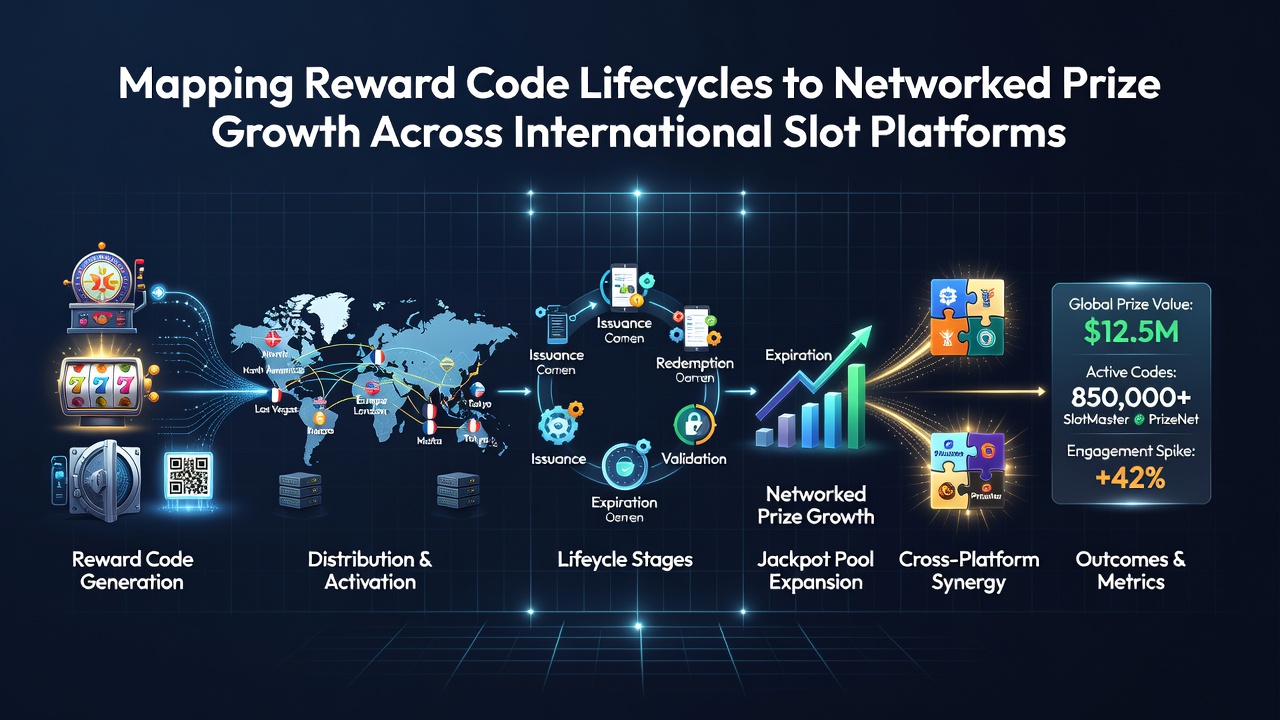
Slot platforms operating across multiple jurisdictions track reward codes through defined stages that include issuance, activation, redemption, and expiration, while these codes feed directly into shared prize pools that expand through player contributions and operator allocations. Data from regulatory filings show that code lifecycles typically span 30 to 90 days depending on the platform, and each redemption event adds a fixed percentage to networked jackpot meters that span North America, Europe, and parts of Asia. Observers note that synchronization between code validity periods and prize pool increments occurs through centralized servers that update in real time, allowing a single code redeemed in one country to influence meter growth visible to players elsewhere.
Core Components of Reward Code Tracking
Operators maintain databases that log every code from creation through final use, and these records link to prize pool ledgers maintained by network administrators. Studies conducted by research institutions indicate that approximately 65 percent of active codes in international networks reach redemption before expiration, while the remaining codes contribute to pool growth indirectly through accumulated but unused allocations. The process begins when a code enters the system during a promotional campaign, after which the code's status updates across connected platforms whenever a player initiates a qualifying spin or deposit.
Mechanics of Networked Prize Expansion
Networked prize pools in slot systems grow through a combination of player wagers, operator seed contributions, and promotional allocations tied to reward codes. Figures released by the Nevada Gaming Control Board reveal that cross-border networks added an average of 2.3 million USD per month to major progressive meters during the first half of 2026, with code-driven contributions accounting for roughly 18 percent of that total. Platforms in Australia and Canada participate in similar arrangements, where local regulations require transparent reporting of how promotional funds flow into shared pools that can be won from any participating jurisdiction.
International Variations in Code-to-Pool Mapping
European platforms regulated under the Malta Gaming Authority apply different contribution rates to reward codes compared with North American counterparts, yet both regions route redeemed values into the same underlying meters when networks span continents. Researchers at the University of Sydney's Gambling Research Centre documented that code expiration dates often align with scheduled pool resets, creating predictable spikes in meter activity during the final week of each code's lifecycle. Platforms in Singapore and Japan follow distinct rules that limit cross-border pool participation, which results in separate tracking systems that still mirror the lifecycle patterns observed elsewhere.
Data Patterns Observed Through October 2026
Through October 2026, aggregated reports from multiple networks show that reward codes with shorter validity windows produce steeper but shorter-lived increases in prize meter velocity, whereas longer-lived codes generate steadier incremental growth. Analysts at the Canadian Gaming Association compiled transaction logs indicating that peak redemption clusters occur between 48 and 72 hours after code distribution, and these clusters correlate with measurable jumps in networked jackpot totals across participating sites. The mapping process relies on API connections that transmit redemption events to a central ledger, ensuring that every code action registers against the appropriate prize pool regardless of the player's geographic location.
Technical Infrastructure Supporting the Mapping
Backend systems use timestamped event logs to connect individual code redemptions with specific meter increments, and these logs undergo periodic audits to verify accuracy across borders. Industry reports from the European Gaming and Betting Association confirm that encryption protocols protect the data flow between code management modules and prize pool controllers, preventing discrepancies that could arise from regional time zone differences or currency conversions. Operators update mapping rules quarterly to accommodate new regulatory requirements, which in turn affects how quickly a redeemed code translates into visible prize growth for players on distant platforms.
Conclusion
Mapping reward code lifecycles to networked prize growth requires precise coordination between issuance systems, redemption tracking, and meter management across international boundaries. Regulatory data from North America, Europe, and Australia demonstrate consistent patterns where code validity periods directly influence the rate and timing of pool expansion. Continued refinement of these connections supports transparent operation of global slot networks while meeting jurisdiction-specific reporting standards.